Stage-RightDevelopment

GOGRO is a range of Stage-Right development toys and kits, crafted with one singular purpose: to help you, as a parent, proactively support your baby's happy growth during the most important window of your child's life. 

Start Right

What does “Stage-Right” means

Stage-right means giving a child the right input for the skills that are emerging now, not just the age printed on the box.

Age-appropriate is a safety and rough-fit label: “suitable for 0–12 months.” Stage-right is developmentally precise. It asks:

  1. What can the child do today?
  2. What skill is about to emerge next?
  3. What play, at what level of challenge and with what parent role, helps that skill along?

Two babies of the same age can be at different stages. One 9-month-old is pulling to stand; another is still mastering sitting. Stage-right meets each child where they are.

The five principles behind Stage-Right

  1. Developmental domains. Every stage is read across gross motor, fine motor, language and communication, cognitive, and social-emotional skills, plus sensory in infancy.
  2. Just-right challenge*. Good play sits slightly beyond what the child can do alone but is achievable with support. Too easy and the child gets bored; too hard and they get frustrated.
  3. Windows, not deadlines. Milestones have typical windows: for example, most babies sit unsupported between about 6 and 9 months. Stage-right play supports the skill as its window opens, and alerts the parent if it’s closing without progress.
  4. Parent’s role. Some stages need assisted play, especially language and social skills, which need a responsive adult. Some skills thrive on unassisted, self-correcting play, such as fine motor and problem-solving. Stage-right tells the parent which one, and how.
  5. Right for this child. Progress is tracked by milestones, not just date of birth. Corrected age is used for premature babies, and guidance adjusts if a child is ahead or needs more time.

*Vygotsky’s zone of proximal development. 

Early Years are the fastest period of brain building : At least 1 million new neural connections are formed every second, shaped by what a baby sees, hears, touches and does.

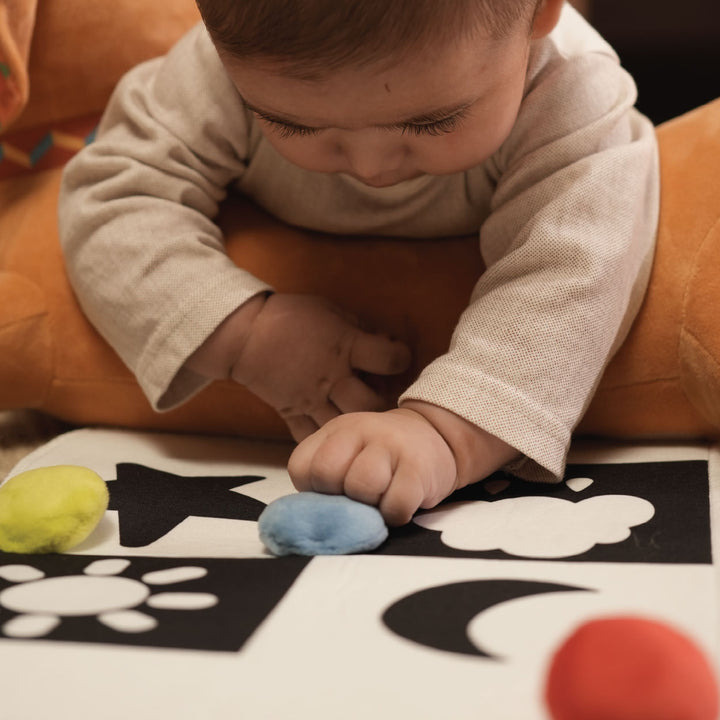
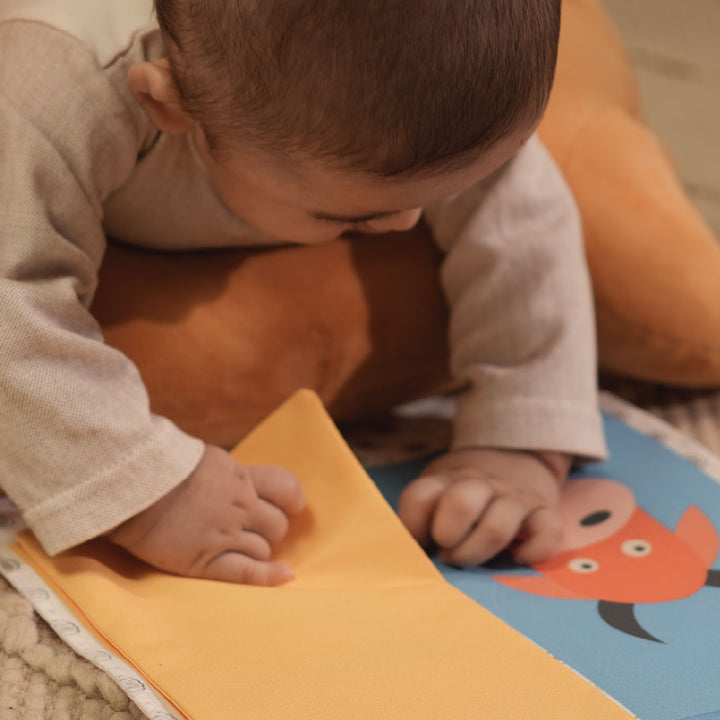
Tummy time is an evidence backed daily habit for motor development in this window. The WHO recommends at least 30 minutes of tummy time a day for babies who are not yet mobile, spread across waking hours.

Stage-right matters as much as quantity. The developing brain expects specific inputs at specific stage: bold contrast before colour, head control before rolling, simple shapes before complex ones. Matching play to the stage is what turns minutes into milestones.

Babies learn best when senses work together. Short, frequent sessions that combine movement, high-contrast visuals, textures and a caregiver’s voice give the brain the inputs it is wired to seek. At GOGRO, we believe toys should do more than entertain. They should help a child grow.

In the earliest months of life, your baby is not just growing, they are building the foundations of how they will move, explore, and engage with the world.

These early movements and interactions are not small moments. They are the beginning of how your child will learn to explore their surroundings.

1

1. Developmental Domains

Sensory Development

Object Permanence

Early Years are the fastest period of brain building : At least 1 million new neural connections are formed every second, shaped by what a baby sees, hears, touches and does.

Tummy time is an evidence backed daily habit for motor development in this window. The WHO recommends at least 30 minutes of tummy time a day for babies who are not yet mobile, spread across waking hours.

Stage-right matters as much as quantity. The developing brain expects specific inputs at specific stage: bold contrast before colour, head control before rolling, simple shapes before complex ones. Matching play to the stage is what turns minutes into milestones.

Babies learn best when senses work together. Short, frequent sessions that combine movement, high-contrast visuals, textures and a caregiver’s voice give the brain the inputs it is wired to seek. At GOGRO, we believe toys should do more than entertain. They should help a child grow.

In the earliest months of life, your baby is not just growing, they are building the foundations of how they will move, explore, and engage with the world.

These early movements and interactions are not small moments. They are the beginning of how your child will learn to explore their surroundings.

GoGro Philosophy

Most baby toys & kits are designed to entertain, to hold attention, to soothe, to occupy. That is not unimportant. But, it is not enough for a baby’s development. Because what your baby needs in these formative years is not just stimulation. They need the right kind of stimulation, at the right developmental stage, focused on specific developmental areas, provided proactively as your baby grows. That is what we are building for parents & children. Every day.

Developmental Milestones

Developmental Milestones

Stage-Right Stimuli

Stage-Right Stimuli

Parent-Child Bonding

Parent-Child Bonding

Parent Stories

Join 50,000+ growing families

Rashi Kumar

Rashi Kumar

“We were struggling with tummy time. He would get fussy within a minute or two. With GRO, he actually stays engaged. We've gone from barely 2 minutes to almost 8-10 minutes in a few days.”

Simran Goyal

Simran Goyal

“I started noticing that she was really focusing on the patterns. Earlier, her eyes would just wander, but now she tracks properly and stays engaged longer. It made me realise how important the right kind of stimulation is at this stage.”

Join the GOGRO Community

Get milestone guides and early access to drops.

+50k